Every information request your authority receives, in one system
Most authorities licence three separate products to cover this — a case management system, a public request portal, and a complaints module — starting at around £19,500 a year between them. Phanera does all three, from intake to disclosure, on one contract with unlimited users.
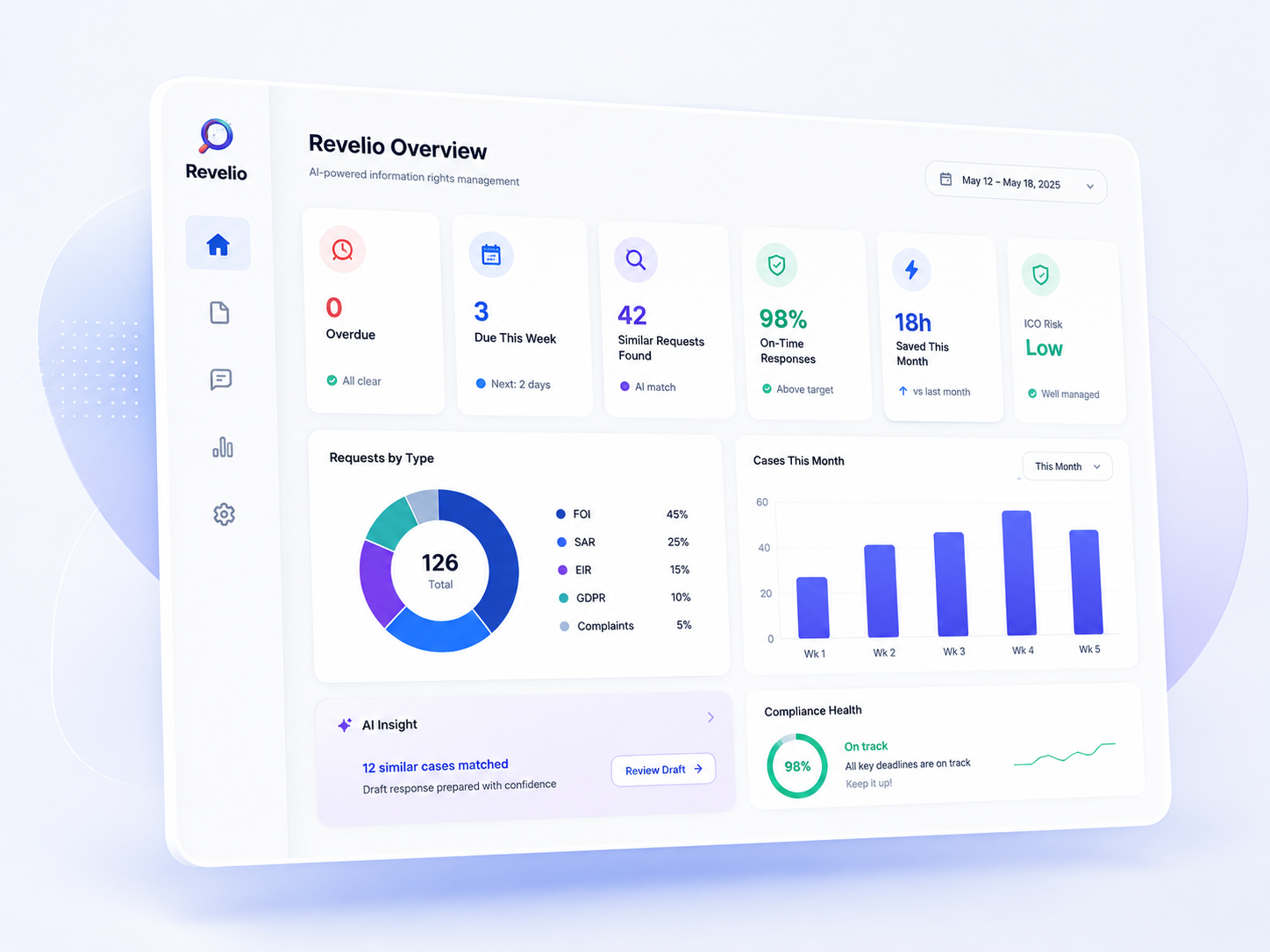
4-in-1
FOI, EIR, SAR & complaints
£0
setup fees
Unlimited
users on every plan
UK
data hosted in the UK
One login instead of three contracts
The usual set-up is a case management system from one vendor, a public request portal from another, and complaints as a third licence — on three renewal dates, with three support routes, and no single view of a case. Phanera is all three.
Case management
FOI, EIR, SAR, GDPR and any custom regime you define — statutory clocks, exemption libraries, refusals, internal review and disclosure. Normally the core licence you pay for.
Public request portal
Branded, on your own domain, with a searchable disclosure log and duplicate deflection before a request is even submitted. Normally bought separately, from a different supplier.
Complaints
Two-stage handling with its own deadlines, escalation between stages, and ombudsman referral logging. Normally sold as a third product at additional cost.
Comparison based on published list prices for the most widely used UK combination. Phanera covers all three on one contract, with unlimited users on every plan.
Built for the organisations that have to answer
Any body with statutory information rights duties — a dozen requests a year or several thousand. Pricing scales with request volume rather than headcount, so a parish council and a county council both get the whole system.
Councils
District, borough, county, unitary, parish and town councils. One system covers FOI and EIR, subject access, and the statutory complaints procedure — including housing complaints duties if you hold stock.
NHS & health bodies
Subject access inside one month, high volume, and heavy third-party redaction in clinical records. Every redaction is recorded against the exemption relied on, so the decision is still defensible years later.
Schools, trusts & universities
Academy trusts are public authorities under FOIA, and also handle parent and pupil subject access alongside a multi-stage complaints procedure. All three run in one place — at trust level or per school.
Police & emergency services
Disclosure decisions that need to withstand scrutiny long after the officer who made them has moved on. Separate timeline, access and admin audit logs, with an exemption-level record for everything withheld.
Housing providers
The Housing Ombudsman's Complaint Handling Code requires a two-stage process on working-day deadlines with annual performance reporting. That's built in — alongside subject access from tenants in disrepair and ASB cases.
Other public bodies
Fire and rescue, transport authorities, national parks, regulators and arm's-length bodies. Define the regime and Phanera runs the clock, the exemptions and the forms for it.
Built around the legislation, not adapted to it
Statutory clocks, exemption libraries and refusal wording for FOIA, the EIRs and the Data Protection Act — configured per regime, rather than bolted onto a generic ticketing tool.
Redaction that records why
Redact in the browser, with the boxes burned permanently into the file. Every redaction is stored against the exemption relied on — with the officer, the timestamp, and whether it was drawn by hand, matched by pattern, or proposed by AI — producing a schedule of redactions that still stands up at internal review.
Every statutory control, not just a deadline counter
Clock stops with recorded reasons, s.9 fee notices, s.12 cost tracking against your appropriate limit, public interest test extensions, third-party consultation, s.45 transfers and internal review — each one recalculating the deadline and writing to the audit trail.
AI grounded in your own past responses
Semantic search surfaces genuinely similar cases, and drafts are built from what your team has actually sent before rather than generic text. Switch it off per organisation, cap it with a monthly token budget, and keep it out of any decision you haven't approved.
Exemptions & refusals
Every FOIA Part II exemption, every EIR reg.12 and 13 exception, and the DPA 2018 Schedule 2 and 3 exemptions — seeded per regime with absolute and qualified flagged, and editable to match your own house wording.
Email Integration
The deadline clock starts the moment a request arrives — whether or not anyone notices the email. Automatic capture means no request slips through and no deadline starts without your team knowing.
Redaction with an audit trail
Redact in the browser with permanent burn-in. Suggestions come from a pattern scan for personal data and, optionally, from AI mapped to your own exemption library — but nothing is applied until an officer confirms it, and every box is recorded against the exemption it relies on.
Fee Notices & Clarification
Stop the clock to issue fee notices with cost tracking or request clarification from the applicant. Automatic deadline recalculation.
Compliance reporting
Compliance rate, volume, overdue, response times, exemptions used, staff workload and s.12 costs — filterable by type, category and department, and every one exports to CSV.
Genuinely bilingual
Cymraeg across the whole application — portal, forms, staff interface, emails, and the statutory exemption wording itself. Requests record the language they arrived in, so replies go back in the right one. Built for Welsh Language Standards rather than bolted on.
See Phanera in action
Browse the full interface — click any screenshot to see it full size.
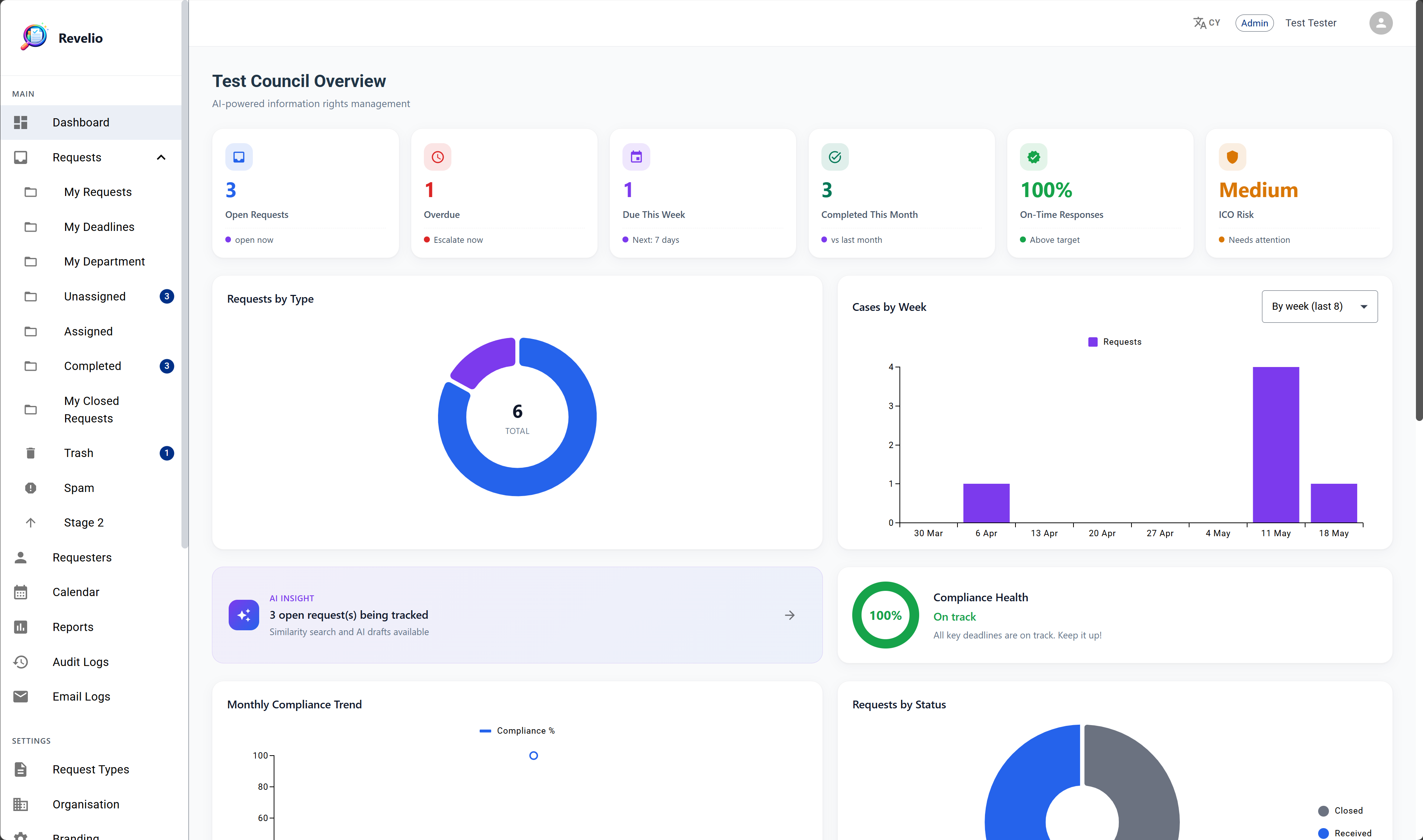
Dashboard
Real-time overview with RAG status indicators and at-a-glance metrics.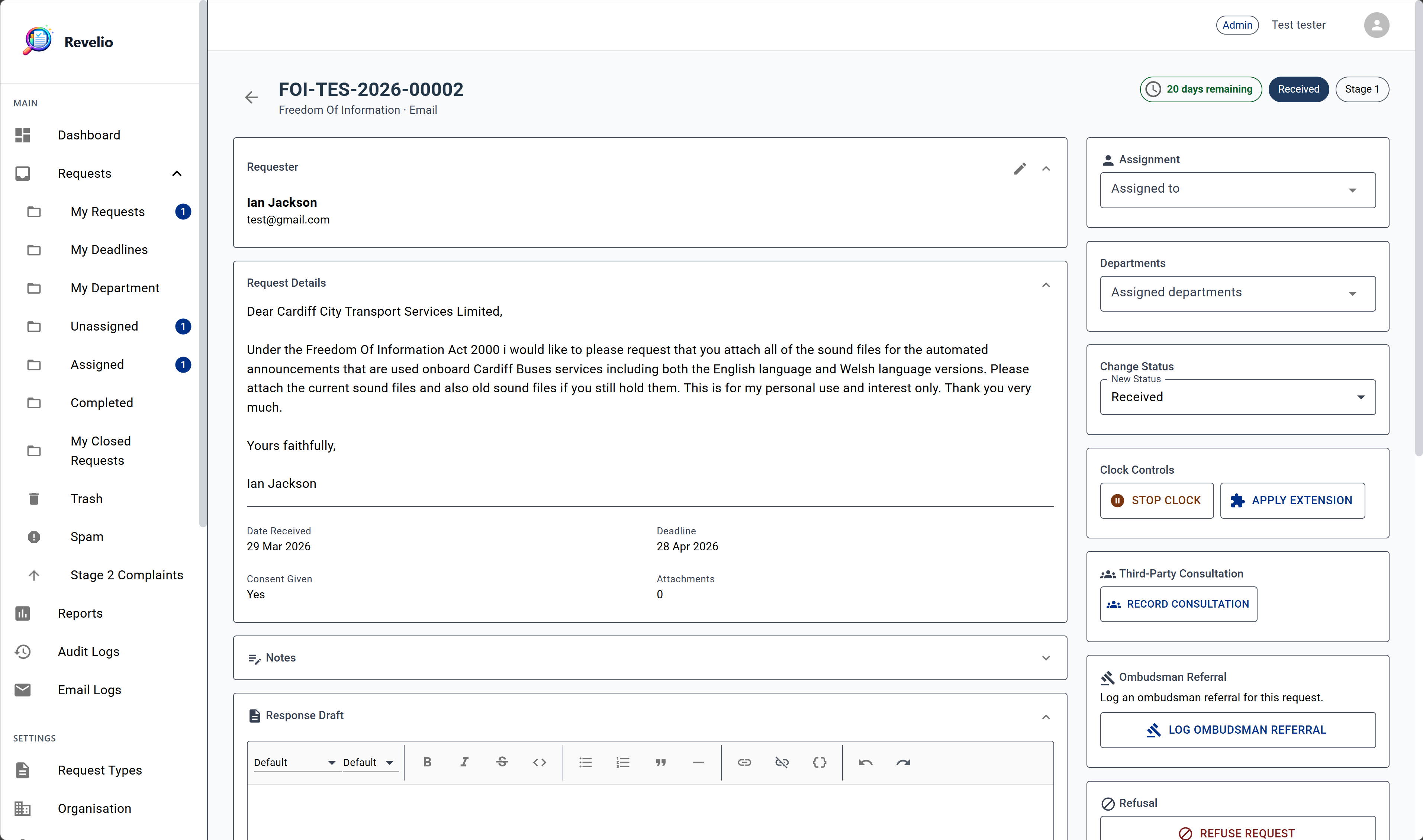
Request Details
Full timeline, messages, notes, attachments, and response drafting.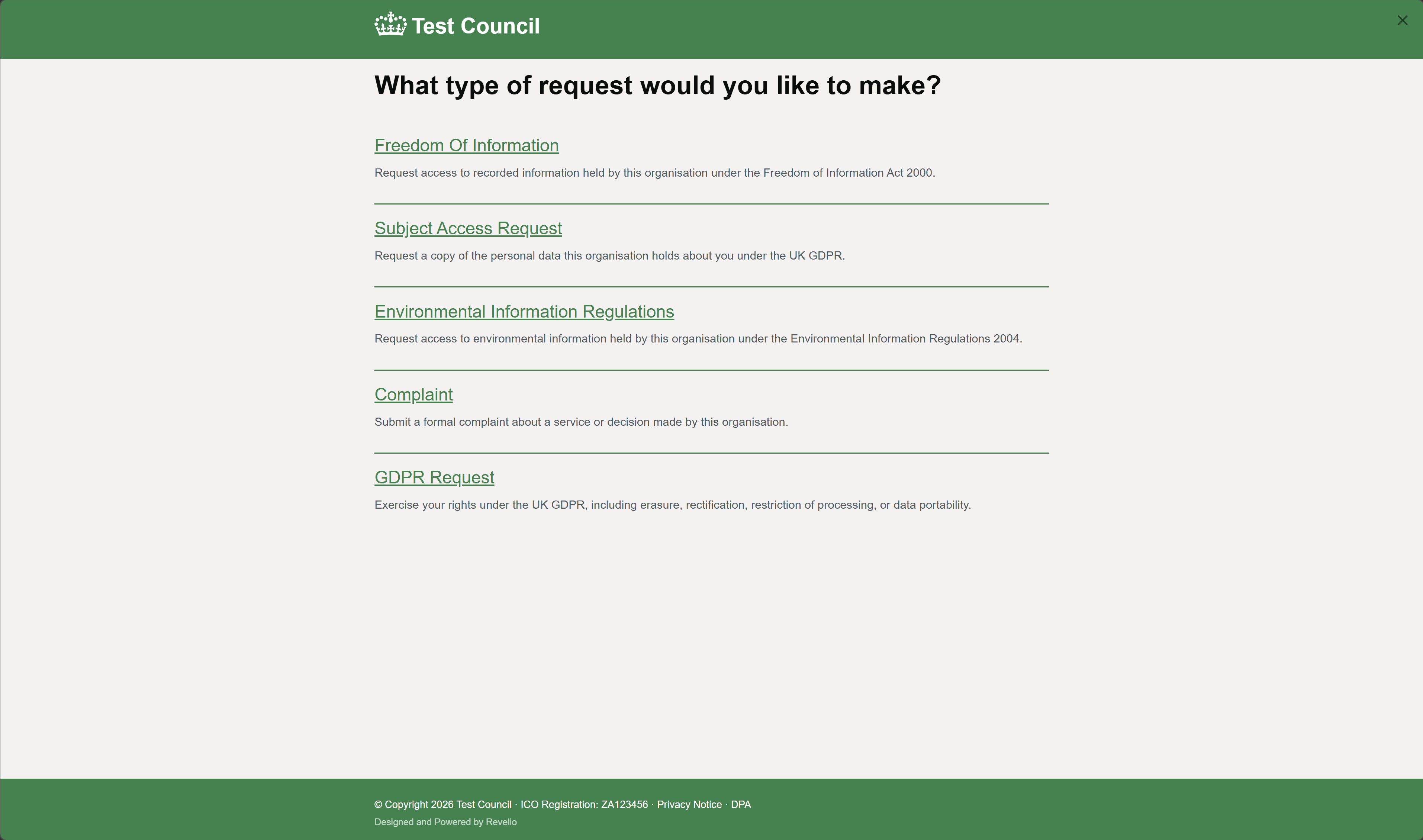
GOV.UK Portal
Branded citizen portal following the GOV.UK Design System.
Four steps to full compliance
Simple onboarding, clear pricing, and a dedicated setup process designed to work with your IT team — not around them.
Create your organisation
Create your account and claim your web address — you'll be live and logging requests faster than you can brief your team. Every day without a proper system is a day your statutory deadlines run untracked.
Configure request types & forms
Set up your request types, statutory deadlines, and intake forms. Phanera calculates every deadline automatically from the moment a request is received — so you never manually track a statutory clock again.
Invite your team
Create roles with granular permissions and assign your team to departments. Requests route automatically — reducing delays, preventing data leaks, and making your audit trail watertight from day one.
Start processing requests
Requests arrive via your portal or email — automatically logged, deadline-tracked, and managed in one place. Respond, publish to your disclosure log, and prove compliance with a full audit trail.
One contract, every regime, unlimited users
Every plan includes FOI, EIR, SAR, GDPR, complaints and the public portal. No per-seat charges, no per-module fees, no setup costs. Pricing is matched to your request volume, so tell us roughly what you handle and we'll quote in a single call.
Unlimited users
No per-module fees
No setup fees
Cancel anytime
Starter
For smaller organisations, parish & town councils
100 responses per month
5 GB secure storage
100,000 AI input tokens/mo (requests analysed)
50,000 AI output tokens/mo (AI-generated text)
Unlimited users
FOI, SAR, EIR, GDPR & Complaints
Public portal & disclosure log
Email-to-request automation
SSO & 2FA
- Most Popular
Standard
For councils, universities & housing
500 responses per month
50 GB secure storage
500,000 AI input tokens/mo (requests analysed)
250,000 AI output tokens/mo (AI-generated text)
Unlimited users
FOI, SAR, EIR, GDPR & Complaints
Public portal & disclosure log
Email-to-request automation
SSO & 2FA
Pro
For NHS, police & high-volume orgs
3000 responses per month
250 GB secure storage
1,000,000 AI input tokens/mo (requests analysed)
1,000,000 AI output tokens/mo (AI-generated text)
Unlimited users
FOI, SAR, EIR, GDPR & Complaints
Public portal & disclosure log
Email-to-request automation
SSO & 2FA
All plans include unlimited users — no per-seat charges, ever.
Tell us what you handle. We'll quote in one call.
Book 30 minutes with us and bring a rough idea of your yearly FOI, EIR, SAR and complaints volumes. You'll leave with a single price covering every module, unlimited users and no setup fees.